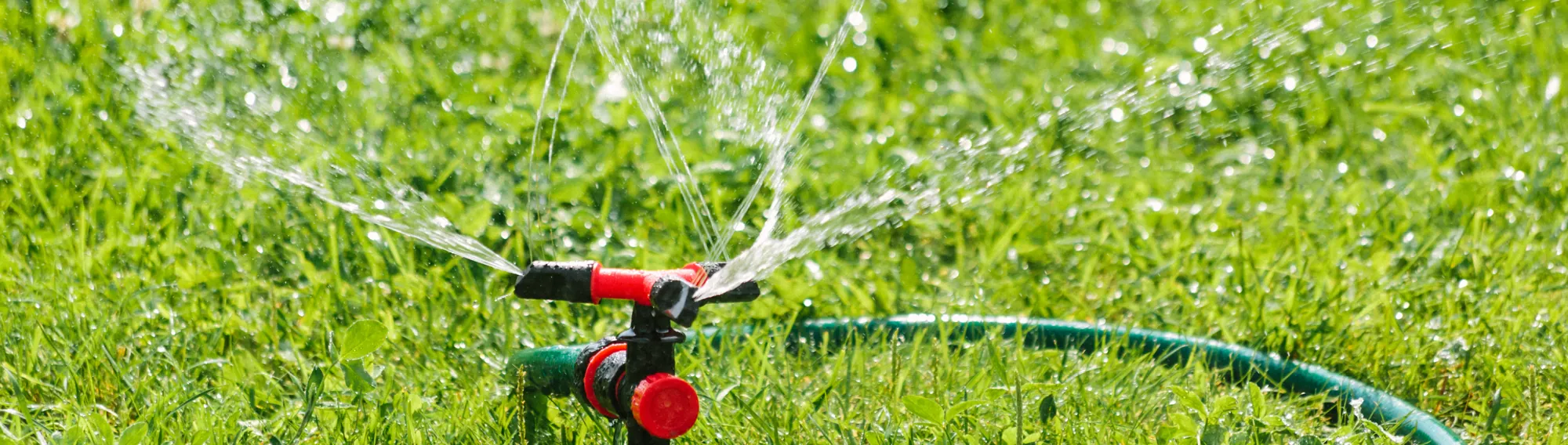
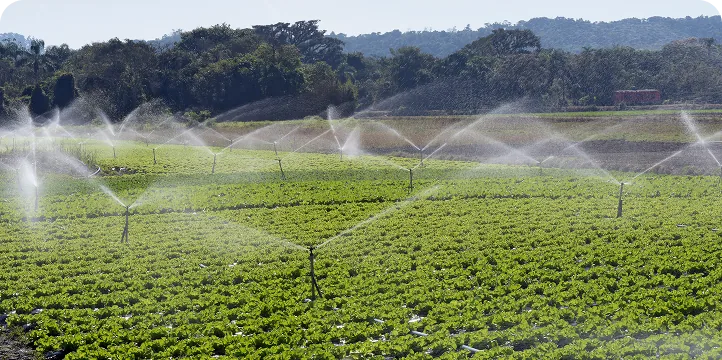
A sprinkler irrigation system is considered the optimal solution for efficient watering of medium and large areas, especially in the climate of Baku and Azerbaijan. However, regardless of the quality of the equipment, without proper design and professional installation, it is impossible to achieve the desired results. In this article, we share the main aspects to consider when installing a system for maximum benefit and efficiency.
If mistakes are made during design and installation, water will not be distributed evenly, water consumption will increase, and breakdowns will occur frequently. Therefore, it is crucial to consider every detail when choosing and installing a sprinkler irrigation system.
The foundation of an effective system lies in a precise analysis of the site. This includes not only the total area but also the shape, terrain, buildings, trees, shrubs, and other objects. Accurate measurements and an understanding of the site’s features are essential for even water distribution: for example, even a slight slope can affect the layout of the sprinklers.
Ideally, prepare a site plan in advance or request an on-site assessment from a Sulama specialist for precise measurements.
The core components of the system are the sprinklers. Their type determines the irrigation radius and uniformity. For lawns, rotary or static models are usually chosen, while for shrubs, drip irrigation or mini-sprinklers are preferred.
The diameter and flow capacity of the equipment must be appropriate. Based on our experience, we always recommend tried-and-tested brands and models suited to the system’s pressure and water consumption requirements.
One of the most common mistakes is neglecting water pressure in the system. If the pressure is too low, irrigation will be uneven; if it is too high, pipes may burst and equipment may fail.
Hydraulic calculations are fundamental for the long-term operation of the system. At Sulama, we always carry out these calculations during design to prevent pressure drops in remote zones, "dead spots," and water wastage.
Accurate hydraulic calculations and proper equipment selection are the key to even irrigation and water savings for many years.
Sprinklers should overlap the irrigation zones: the spray patterns of neighbouring sprinklers should overlap by at least 30–50%. This prevents dry spots, especially in windy and hot conditions.
A common mistake is to save on the number of sprinklers. This leads to "dead zones" where plants dry out. Increasing pressure to artificially extend the radius can damage the equipment.
Modern sprinkler irrigation systems are equipped with automatic controls such as controllers, timers, and rain sensors. These allow for water savings, maintaining the correct irrigation regime, and eliminating human error.
Automation is particularly important for areas larger than 300–500 m², as manual watering becomes inefficient and difficult. Properly configured controllers can realistically reduce water consumption by 20–40%.
Installation of a sprinkler irrigation system is carried out in stages: site marking, excavation, laying pipes, installing sprinklers and automation, and testing. Mistakes at any stage can be costly and may require a complete system overhaul.
At Sulama, we always prioritise professional installation: experienced technicians provide solutions tailored to the site’s features and guarantee their work.
Technically, it is possible if you have basic hydraulic knowledge and experience. However, for large areas and complex layouts, it is more advisable to entrust the design and installation to professionals.
For most sprinklers, 2.5–3.5 bar is sufficient. For reliable operation, you should consider not only the pressure but also the total water consumption.
It is recommended to carry out preventive checks and filter cleaning, as well as monitor the automation and sprinkler operation at least once per season.
Yes, thanks to controllers and sensors, inefficient and excessive irrigation can be avoided, resulting in up to a 40% reduction in water usage.
Check the sprinkler layout and system pressure. If necessary, add an extra sprinkler or nozzle, or adjust the arrangement of existing ones.