A beautiful, dense lawn is the main adornment of any garden plot. However, even the highest quality seeds will not deliver the desired result without proper irrigation. Many people view irrigation as simply adding water, but without the correct approach, your lawn will quickly turn yellow, develop patches, or the soil will dry out.
In this article, we explain why sprinkler irrigation systems are the best choice for lawns, how to select the right irrigation regime and simplify your routine through automation, and what to pay attention to in order to keep your greenery healthy.
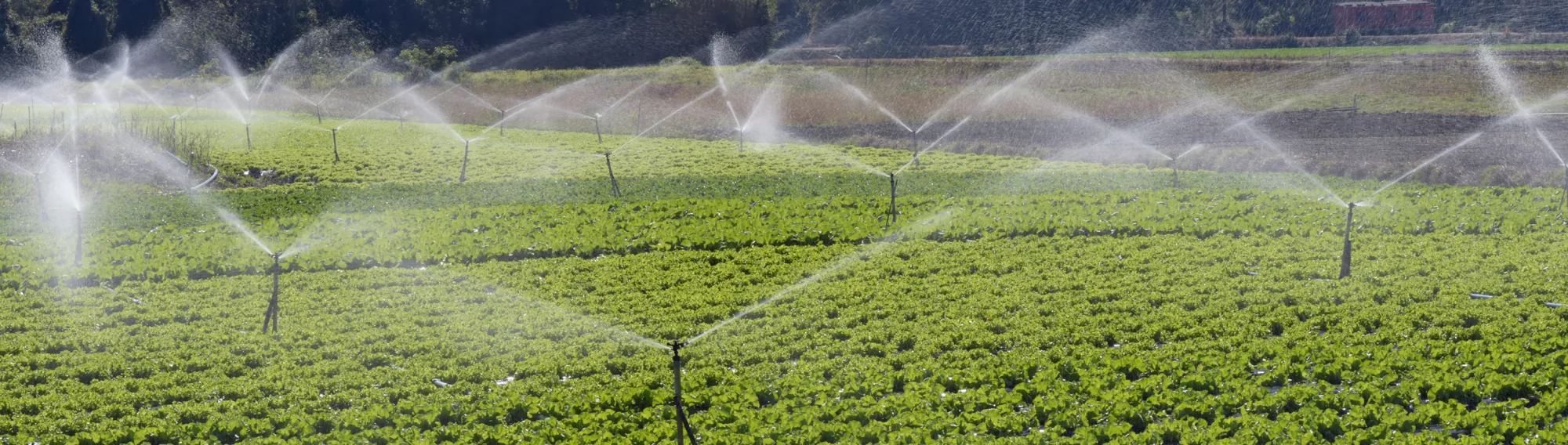
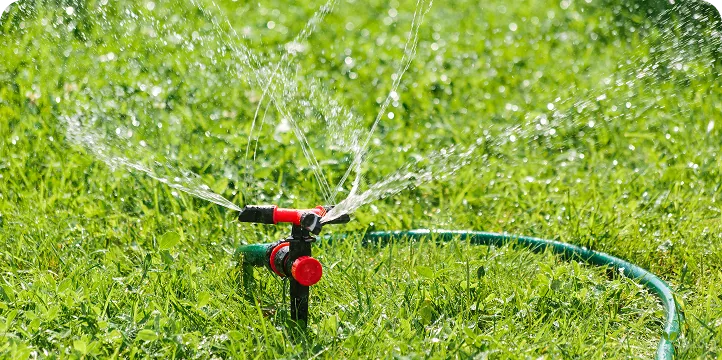
Lawn roots are shallow and thin, and the area is usually large. Watering by hand or with a hose is both time-consuming and uneven. A sprinkler irrigation system evenly moistens the entire lawn with fine water droplets, does not damage the soil, and prevents seed washout.
Given Azerbaijan’s hot climate and long periods of drought, a sprinkler irrigation system helps keep your lawn green and healthy all year round. At Sulama MMC, we recommend this method for both private residences and public spaces.
The frequency and volume of irrigation depend on the season, soil type, and the age of the lawn. The main goal is to ensure that the soil remains moist to a depth of 10–15 cm, as this is where the main roots are located.
The best time to irrigate is in the morning (before 9 am). This reduces evaporation and the risk of sunburn. Evening watering is also possible, but it increases the risk of fungal diseases.
Main principle for lawn irrigation: not little and often, but less frequent and thorough watering – this encourages deeper root growth and greater drought resistance.
To check soil moisture, use a simple garden tool or a long screwdriver: if the soil is dry at a depth of 10 cm, it’s time to irrigate.
Manual lawn watering is both tiring and risky – it’s hard to calculate the right amount of water, and you might forget to irrigate altogether. Automated sprinkler irrigation systems solve these problems:
When designing the system, consider the area size, water source, system pressure, and the types of sprinklers to be used (rotor, fan-type, etc.). If your plot has uneven terrain or mixed plantings, we recommend consulting Sulama MMC specialists – correct equipment selection and installation are crucial.
Automation is especially convenient for country houses or those living outside the city. It guarantees a green lawn at all times, even when the owners are away for extended periods.
Even with the most modern system, many people make the same mistakes, resulting in yellowing, patchy, or diseased lawns:
To avoid these problems, check the system regularly, clean filters, adjust sprinkler sectors, and monitor the weather forecast. At the start of the season and during system winterisation, it is advisable to call in a specialist.
Irrigation is just one aspect of lawn maintenance. A comprehensive approach is essential for a dense and healthy turf:
Avoid walking on the lawn immediately after irrigation – this compacts the soil and creates "bare spots". If yellow patches appear, check the operation of the sprinklers and the quality of the water.
At the end of the season, the irrigation system must be winterised: drain the water, clean the lines with air, and check the nozzles and other components. This ensures the equipment’s longevity and trouble-free operation next year.
A properly designed and installed sprinkler irrigation system is the key to a trouble-free and beautiful lawn. Zoning, equipment selection, and automation can be challenging, especially if the plot is non-standard or has varying elevations.
At Sulama MMC, we have extensive experience with all types of lawns in Azerbaijan and are ready to assist at any stage – from consultation to complete installation and maintenance.
Technically, yes, but water will not be distributed evenly – some areas will dry out while others become oversaturated. Additionally, manual watering is time-consuming and labour-intensive.
If the grass looks dull, feels stiff, and dry patches appear, these are signs of insufficient watering. Check soil moisture at a depth of 10 cm and increase irrigation if necessary.
If the rain has moistened the soil to the required depth, additional irrigation is not needed. Systems with rain sensors can automatically skip these cycles.
At least twice a year: at the start of the season and during autumn winterisation. Nozzles, filters, sensors, and automation should be checked regularly.
Check the operation of the sprinklers and water quality, and inspect for pests or diseases. Sometimes, adjusting the irrigation sectors or applying fertiliser will resolve the issue.