Choosing the right irrigation system for your garden or land is crucial for healthy plant growth and for reducing water and time wastage. Most garden and lawn owners face this question: is drip irrigation more efficient, or is sprinkler irrigation the better choice? Both options have their own distinct advantages and limitations.
At Sulama MMC, we share our practical experience in installing and operating both drip and sprinkler irrigation systems across Azerbaijan. In this article, we clarify which system is best suited for different plants and conditions.
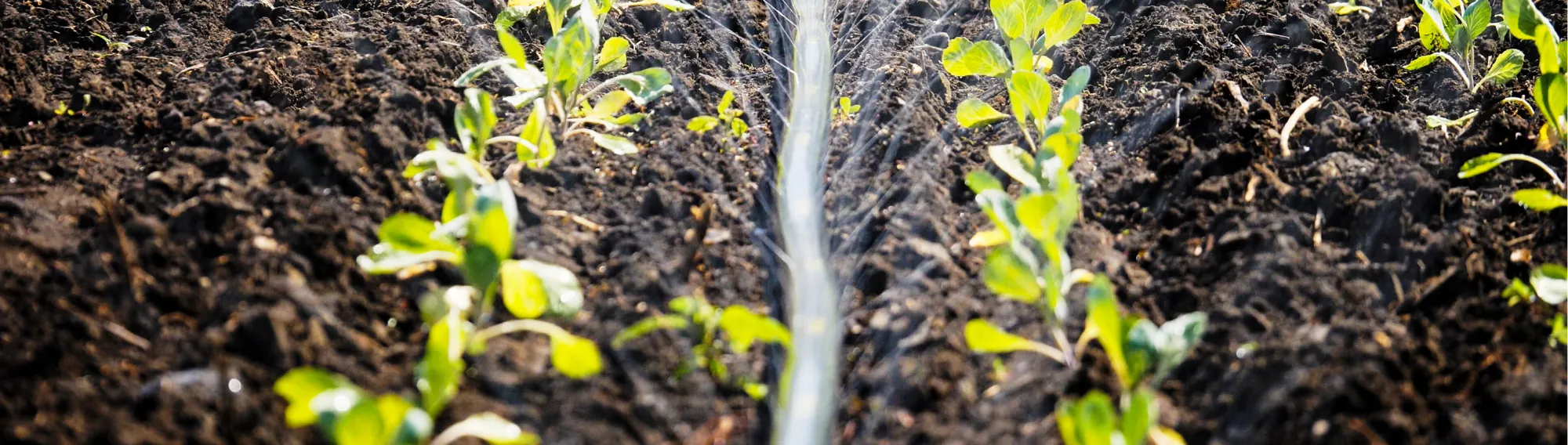
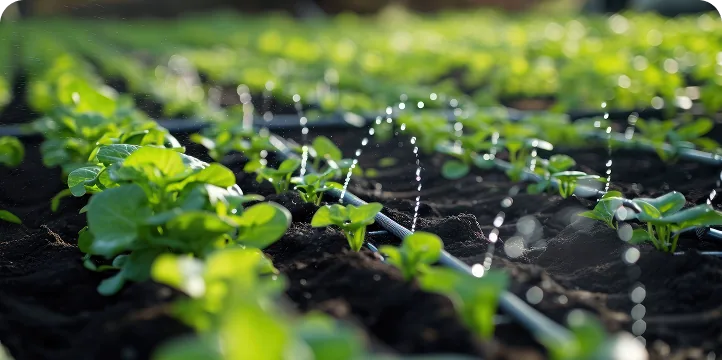
Drip irrigation delivers water directly to the plant’s root zone via drippers or drip lines. This method minimises water consumption and virtually eliminates evaporation. Soil moisture remains stable, and only the required areas are irrigated.
With sprinkler irrigation, water is sprayed over the area through special nozzles, creating a rain-like effect. This method is convenient for large areas and lawns, but some water loss due to evaporation and runoff is inevitable.
The type of plant is the main criterion when selecting an irrigation method. Different plants have varying water requirements and root structures.
If your plot includes both lawn and fruit or vegetable beds, it is possible to combine several systems. Our experience shows that a properly designed combined system can reduce water consumption by 30–50%.
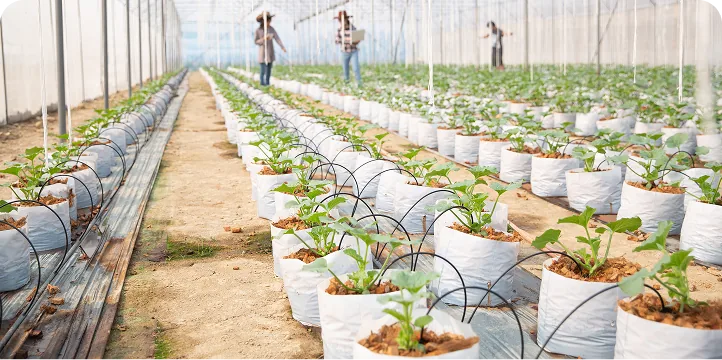
The size and topography of your plot directly affect your choice of irrigation system. For small plots and greenhouses, drip irrigation is the most practical option—water usage is easy to calculate, and installation and maintenance costs are low.
For large open areas and lawns, sprinkler irrigation provides fast and even watering. However, in areas with complex terrain or many trees and shrubs, sprinklers may deliver water unevenly, and some water may run off or evaporate.
Remember: proper design and installation—such as with the help of Sulama MMC specialists—will prevent common mistakes: incorrect nozzle selection, insufficient pressure, uneven watering, and so on.
Water is the most valuable resource for any gardener. Drip irrigation typically uses 1–4 litres of water per plant per hour. Sprinkler irrigation, on the other hand, consumes 5–10 litres per square metre per watering session.
Maintenance of a drip system mainly involves flushing filters and checking drippers, which is inexpensive and straightforward. Sprinkler systems require seasonal inspection of nozzles, pipes, and pressure, and occasionally parts need to be replaced.
Initial costs depend on plot size, plant type, and system complexity. Drip irrigation is more cost-effective for small and medium-sized areas—a metre of drip tape costs around 3–5 AZN, and installation is simple.
Sprinkler irrigation requires pipes, a pump station, and nozzles, making it more expensive. With the addition of automatic controllers and timers, the average cost can reach 10–15 AZN per square metre.
Your choice between drip and sprinkler irrigation depends on your goals: for water savings and vegetables, choose drip; for lawns and large areas, sprinklers are suitable. A combined approach often delivers the best results.
At Sulama MMC, we recommend seeking professional advice before choosing an irrigation system to avoid extra costs and design errors.
Drip irrigation: The ideal choice for vegetable beds, fruit trees, shrubs, greenhouses, and mixed plantings. Especially if water savings and budget are priorities, or if your plot has an irregular shape or complex terrain, drip irrigation is the best solution.
Sprinkler irrigation: Suitable for large lawns, parks, sports fields, and ornamental flower beds. Here, surface evenness and large area coverage are important. Sprinkler systems work well on flat, open sites.
Remember: a properly calculated and installed system will work efficiently and reliably in the long term. For the best solution in Baku and across Azerbaijan, Sulama MMC specialists are ready to assist you.
Yes, this is a very common practice. For example, sprinklers can be used for lawns, while drip irrigation is applied to vegetables and trees. The key is to calculate the zones and pressure correctly.
Drip irrigation can save up to 60% of water. The main advantage is direct delivery to the roots and minimal evaporation.
Drip irrigation is the most optimal choice for greenhouses. It ensures stable moisture and minimal water loss, which is especially important for vegetables and greens.
No, the main maintenance for drip irrigation involves periodically cleaning the filter and drippers. This does not require much time or effort.
For small plots, especially with drip irrigation, you can install it yourself. However, for large or complex systems, it is recommended to consult Sulama MMC specialists.